Jeremy Packman: Before Adding Another School Program, Fix the System You Already Have
-
California education leader Jeremy Packman says schools should examine implementation, ownership, and existing workflows before assuming another program will solve an old problem.
SANTA ROSA, Calif., Sep 10, 2026, ZEX PR WIRE — When a school faces a persistent problem, the response can be predictable: find a new program.
A new behavior framework is introduced. A new intervention is launched. Staff attend professional development training. New procedures are added to calendars and meetings. For a while, the initiative receives attention. Then daily demands take over, implementation becomes uneven, lacking fidelity, and another solution eventually takes its place.
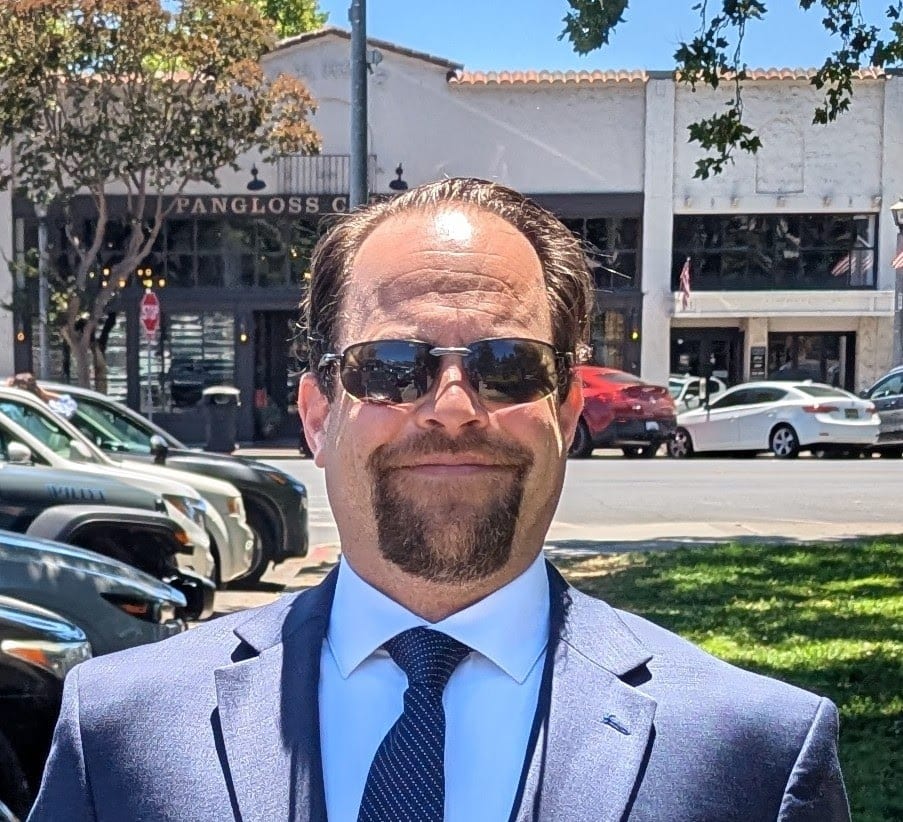
After 25 years working in public education, Jeremy Packman believes school leaders should challenge that cycle.
“Before adding something new, I want to know why what we already have isn’t working,” Packman said. “Is the program actually the problem, or did we never create the structure needed to implement it consistently?”
For Packman, the distinction matters. Schools can have strong ideas on paper and still struggle to turn them into everyday practice.
New Programs Cannot Fix Unclear Systems
Packman has worked as a teacher, assistant principal, principal, and Administrator on Special Assignment. Across those roles, he has seen how school improvement efforts can become harder to sustain when responsibilities are unclear.
A program may require a true cycle of inquiry, with teachers to document interventions, administrators to review progress, specialists to provide support, and teams to meet regularly. If nobody knows exactly who owns each step, or if each participant isn’t following the program with fidelity, the program can quickly become another item competing for attention.
“One of the first things I look for is ownership,” Packman said. “If five people are involved but nobody can tell me who is responsible for the next step, that’s where I expect the process to break.”
He encourages leaders to map existing workflows before purchasing a new product or introducing another initiative. Who starts the process? Who follows up? Where is progress recorded? How often is it reviewed? What happens when something is missed?
Those questions are basic by design.
“You can have an impressive program and still have a weak process underneath it,” he said. “Adding another layer doesn’t repair the foundation.”
Initiative Overload Has an Operational Cost
New initiatives also compete with existing responsibilities. “I remember taking over a principal position, and in my first week I was directed to apply three new initiatives before I even walked in the door”. This level of change was overwhelming for the staff and led to major concerns with my leadership approach
Teachers still have lessons to prepare. Administrators still have student and staff issues to address. Support teams still have meetings, interventions, and follow-ups to manage.
Every addition asks people to divide their attention further.
Packman believes leaders should therefore ask what will be removed when something new is introduced, and why.
“If you’re asking staff to start doing three new things on Monday, what are you telling them they can stop doing?” he said. “If the answer is nothing, you’re not really prioritizing. You’re just adding. Instead, a good administrative approach would be to see how any new initiative can be built into what teachers are already doing. This requires adding teaching voice to the decision process”
Packman’s preference is to simplify first.
“I’d rather find the point where the process breaks than throw out the entire process,” Packman said. “Sometimes the fix is a clearer handoff, a shared tracker, or a meeting that actually ends with someone owning the next action.”
This reflects a broader principle in his leadership approach: implementation deserves as much attention as planning.
An initiative does not become part of a school’s culture because it appears in a presentation. It becomes part of the culture when people understand it, use it consistently, and know what to do when it stops working.
School Leaders Should Ask Better Questions Before Saying Yes
Packman suggests that leaders pressure-test new initiatives before introducing them.
What specific problem is this supposed to solve? Is there evidence that the existing approach has failed, or has it simply been implemented inconsistently? What type of data is being used as evidence, and Who will own the new work? How will staff know whether it is working? What existing responsibility can be removed to make room for it?
There is another question that can be harder for leaders to ask: Do we need something new at all?
Schools operate in an environment where improvement is often associated with addition. A new initiative can feel like visible action. Fixing an existing workflow can appear less ambitious.
Packman argues that the less exciting option may sometimes produce the better result.
“There’s nothing flashy about getting the same basic process right every week,” he said. “But consistency is what makes a system dependable.”
Better Implementation Starts With Listening
Packman’s approach does not mean schools should resist change. His career has required him to lead through significant change, including school closures and reopening during COVID-19.
Instead, he argues for more disciplined change.
He has described active listening as central to his leadership style. That becomes especially important before asking educators to adopt something new.
Teachers and support staff often know where an existing process is failing because they work inside it every day. That said, they may still be very resistant to the change. Their experience can reveal unnecessary steps, conflicting expectations, duplicated work, and responsibilities that were never clearly assigned.
“You have to meet people where they are,” Packman said. “If you’re changing a system, understand what people are already doing before you tell them what they need to do next.”
That does not mean every concern should stop an initiative. It means implementation should reflect the environment in which the initiative must survive.
About Jeremy Packman
Jeremy Packman is a California-based Administrator on Special Assignment with 25 years of experience in public education, including 14 years in school leadership. His background includes classroom teaching and administrative leadership, with experience in student services, MTSS, restorative practices, special education systems, and education law. His work focuses on building practical systems that create clearer expectations, stronger follow-through, and better support for students, families, and educators. Learn more at JeremyPackman.com.
Disclaimer: The views, suggestions, and opinions expressed here are the sole responsibility of the experts. No DFHS Newspaper journalist was involved in the writing and production of this article.